
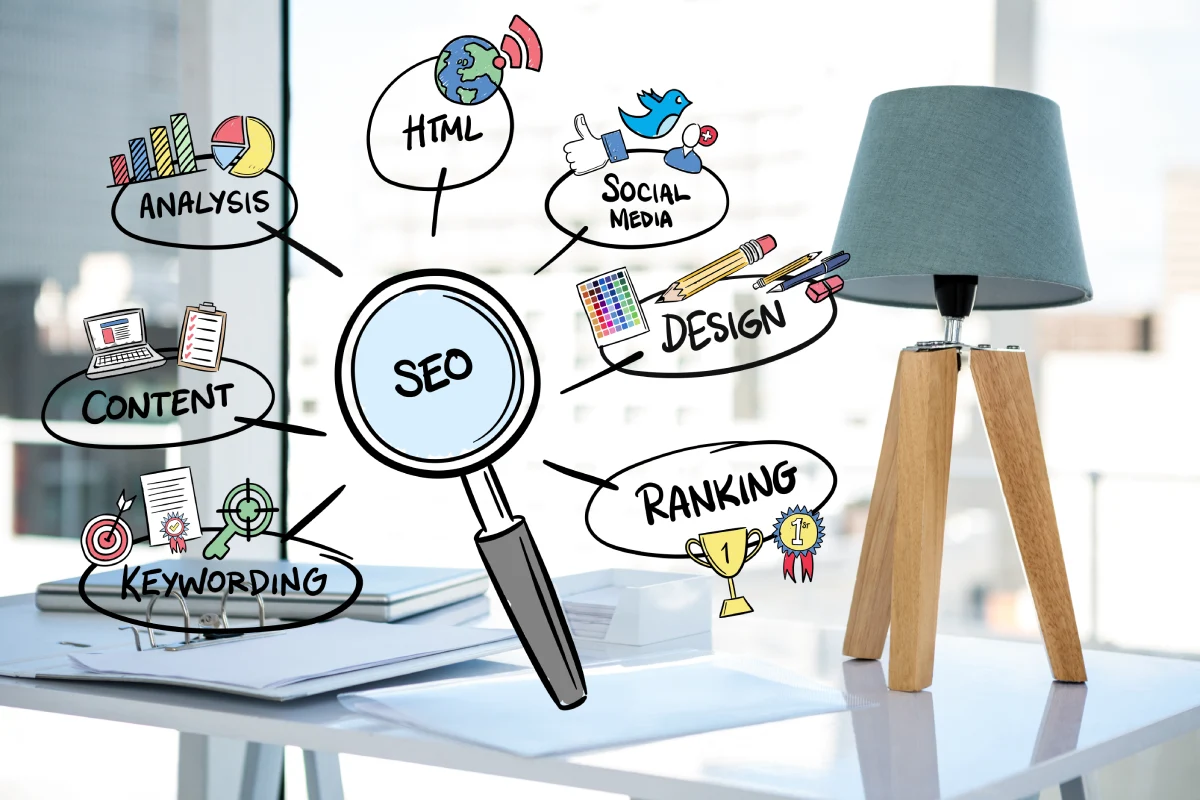
SEO (Search Engine Optimisation) is a set of practices that help your content appear higher in Google search results. For creators building their presence through MyLinkHub, SEO is the logical next step – instead of waiting for someone to stumble upon your profile, you actively pull traffic from Google. In this article you'll learn how to start ranking your content even without a technical background.
How Google works – the basics you need to know
Google doesn't read pages the way a human does. It uses bots (crawlers) that scan content, analyse page structure, and evaluate hundreds of ranking signals. The most important ones include:
- Relevance – does your content answer the user's query?
- Authority – how many other sites link to yours (backlinks)
- User experience – page load time, mobile-friendliness, no intrusive ads
- E-E-A-T – Experience, Expertise, Authoritativeness, Trustworthiness: proof that you're a credible source
Keyword research – the foundation of every SEO strategy
Keywords are the phrases your potential readers type into Google. Well-chosen keywords are the difference between content found by a handful of people and content visited by thousands every month.
How to find keywords
- Google Search Console – free tool showing which queries you already rank for
- Google Keyword Planner – search volume data (requires a Google Ads account)
- Ubersuggest / Answer The Public – free tools for generating keyword ideas
- Google Autocomplete – start typing a phrase and watch the suggestions
Long-tail keywords – gold for new websites
Instead of competing for "marketing" (millions of results), target long-tail phrases: "how to start email marketing without a list" (a few hundred results). Less competition, more specific user intent – higher conversion rate at lower traffic volumes.
On-page optimisation – what to do on every page
Title tag and meta description
The title tag is the most important on-page SEO element. It should include your main keyword, be 50–60 characters long, and invite clicks. The meta description doesn't directly influence rankings, but a well-written one boosts click-through rates in search results.
H1–H3 heading structure
Every page needs one H1 (the article title), several H2s (main sections), and H3s (subsections). Headings help Google understand content structure and can be pulled into featured snippets at the top of search results.
Keyword placement in your content
Use your main keyword in the first paragraph, naturally throughout the body, and in at least one H2 heading. Avoid keyword stuffing – Google penalises artificial over-optimisation.
Internal and external linking
Internal links (links to your own content) help Google discover and index all your pages while keeping readers on your site longer. Every new article should include 2–3 links to existing content.
Backlinks (links from other sites to yours) are one of the strongest ranking signals. You earn them by creating outstanding content others want to cite, writing guest posts, and building industry relationships. How to create that kind of content step by step is covered in our Online Marketing hub.
Technical SEO for creators – the minimum that makes a difference
- Page speed – check with Google PageSpeed Insights; over 3 seconds load time causes 53% of mobile visitors to leave
- Mobile-first – Google indexes the mobile version of your site as the primary one
- HTTPS – an SSL certificate is a security requirement and a ranking signal
- XML sitemap – helps Google bots discover all your pages
- Canonical URLs – prevents issues with duplicate content
How long does SEO take to work?
SEO is a marathon, not a sprint. First results typically appear after 3–6 months of consistent work. But once you rank well, organic traffic flows to you without ongoing costs – unlike paid ads, which stop the moment you stop paying.
Where to start today
Set up Google Search Console (free), identify 5–10 long-tail keywords in your niche, and write your first SEO-optimised article. Consistency and content quality are the only strategies that work over the long term.
SEO without valuable content is just technique without substance – check out how to build a content marketing strategy that gives Google something worth indexing.
SEO is not magic. It's the patient delivery of value to the people you seek to serve. – Rand Fishkin